


Insolvency practitioners, like professionals in accounting, law, and finance, must carefully manage their own personal liability when accepting formal appointments.
In New Zealand, there are three main forms of insolvency appointments such as liquidation, receivership, and voluntary administration. Each of them carries different levels of personal exposure for the appointed practitioner.
Importantly, insolvency practitioners are not personally liable for debts incurred by the company before their appointment. Personal liability only arises from the point the appointment is accepted.
Liquidation
Liquidation is generally considered the lowest-risk appointment from a personal liability perspective. A liquidator acts on behalf of the company to manage and realise its assets, but they are not personally liable for any costs incurred by the business while it is in liquidation.
The Companies Act 1993 also provides protection for liquidator in certain situations. For example, Section 275 requires essential service providers to continue supplying services to a company in liquidation and prevents them from demanding personal guarantees from the liquidator.
However, liquidator can still face personal liability in specific circumstances.
Errors in administration
If a liquidator makes an error in the administration process or distributes funds incorrectly, they may become personally liable for the loss.
For example, liquidator is required to comply with Schedule 7 of the Act, related legislation, and extensive case law governing how recovered funds are dealt with.
A well-known example is the Sleepyhead Manufacturing case involving liquidator(s) of King Robb Limited[1]. The liquidator(s) sold the bedding products of the Company for $26,225 and distributed the proceeds to a creditor holding a General Security Agreement (GSA). However, Sleepyhead Manufacturing held a registered security interest over the assets through the PPSR. The Court found that the proceeds from the sale had been paid to the wrong party and held the liquidator(s) personally liable to repay the $26,225 plus interest to Sleepyhead.
To mitigate the potential risks, liquidator can apply to the Court for directions on difficult or uncertain matters.
Section 301
Section 301 of the Act allows the Court to hold directors, promoters, managers, liquidators, and receivers personally liable where company assets or funds have been misapplied, retained, or improperly dealt with.
If a liquidator improperly uses or retains company property or money, the Court may order them to repay or restore the assets, including interest where appropriate.
Actions undertaken by the liquidator
Actions arising from the winding up of a company are brought against the liquidator, as they relate to actions undertaken by the liquidator in the exercise of their duties and powers under the Act. Accordingly, if any liability arises, it is the liability of the liquidator[2].
Receivership
Receiverships involve a much higher level of personal exposure for insolvency practitioners. A receiver is personally liable for costs incurred while operating the receivership, although they are generally entitled to be indemnified from the company’s assets.
Where a receiver continues trading the business after appointment, they assume personal liability for expenses incurred during that period. However, Section 32 of the Receiverships Act 1993 provides several important exceptions.
Employment agreements
A receiver is not personally liable for the first two weeks of wages owed to existing employees, provided the employment agreements are terminated within 14 days of the appointment.
Lease obligations
A receiver becomes personally liable for rent accruing 14 days after appointment unless the lease is cancelled within that period. Importantly, this liability generally relates only to the rental payments themselves and not to other obligations under the lease agreement.
For contracts other than employment agreements or leases, a receiver (and an administrator) is generally not personally liable unless they expressly adopt or personally bind themselves to the agreement.
The Court also has discretion to extend these statutory timeframes where appropriate.
Voluntary Administration
The personal liability framework for voluntary administrators is broadly similar to that of receivers. Administrator may become personally liable for certain trading costs, employee obligations, and lease commitments incurred during the administration period.
The key difference relates to lease agreements. Unlike receivers, who have 14 days to disclaim leases, voluntary administrators have only seven days to identify and terminate lease arrangements. If the administrator continues occupying the premises beyond that period, personal liability for the lease may arise even if the lease has technically been cancelled. To avoid liability, the administrator must both terminate the lease and vacate the premises within the statutory timeframe.
Importantly, the legislation does not require actual knowledge of the lease. This means an administrator may still become personally liable for a lease they unaware existed.
Once the voluntary administration ends, typically through liquidation, a Deed of Company Arrangement (DOCA), or the return of control to directors, the administrator’s personal liability generally comes to an end.
Why personal liability exists
The personal liability imposed on a receiver and voluntary administrator serves an important public policy purpose. In many insolvency situations, businesses must continue trading for a period to preserve value, maintain operations, or achieve a better outcome for creditors.
Personal liability supports this process in several ways[SD1] :
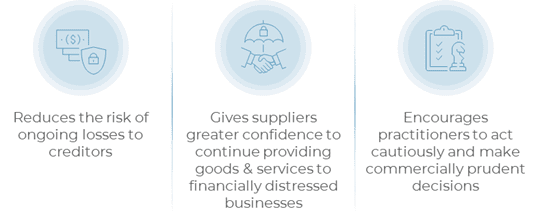
Without these protections and obligations, suppliers and employees would be far less willing to support businesses undergoing insolvency processes, potentially reducing recoveries for creditors overall.
If you have any questions or enquiries, please do not hesitate to contact the team at Waterstone.
To get in touch with our team, please contact us at reception@waterstone.co.nz or call 0800 256 733.
[1] Dunphy v Sleepyhead Manufacturing Co Ltd [2007] NZCA 241 at [51]
[2] Waimate Investments Ltd (In liquidation) v O’Dea [2004] 2 NZLR 433 (CA) [32]

