
Liquidation Trends: Australia vs New Zealand

Despite the significant difference in economic scale, the data indicates that businesses in Australia and New Zealand have responded in a notably similar manner to the challenges of the post-pandemic period.
Personal liabilities of Liquidators, Receivers and Administrators

Insolvency practitioners, like professionals in accounting, law, and finance, must carefully manage their own personal liability when accepting formal appointments. In New Zealand, there are three main forms of insolvency appointments such as liquidation, receivership, and voluntary administration. Each of them carries different levels of personal exposure for the appointed practitioner. Importantly, insolvency practitioners are […]
What is a running account’s relevance to voidable transactions?

One of the common defences raised to a claim made by a liquidator that a transaction is voidable is that the transaction forms part of a continuing business relationship, also known as a running account. The running account defence is provided for in section 292(4B) of the Companies Act 1993: (4B) Where then The Court […]
Crown fines in liquidation still unresolved in 2026

Company liquidations remain elevated in 2026, with the IRD continuing a firm enforcement approach. Practitioners regularly encounter files with provable tax debts alongside penal liabilities such as court-imposed fines and reparation orders, which sit outside the normal insolvency distribution framework. When these penal elements surface, a structural tension is exposed that Parliament has long recognised […]
A Three-year forecast for NZ insolvency
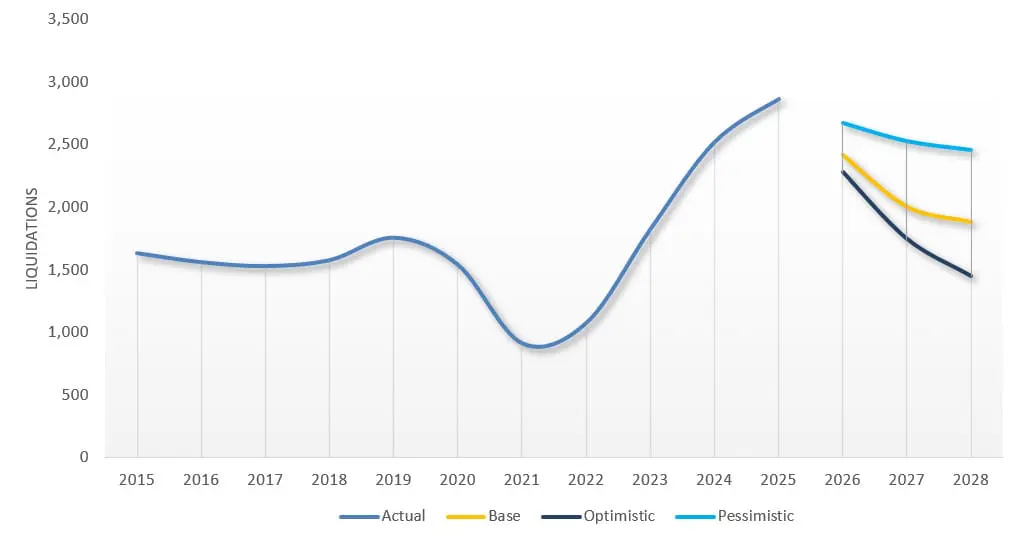
A common question regarding the current state of the economy and insolvency is: “How much longer do we have left of this?” Over the past three years, insolvency activity has risen significantly, reflecting the challenging economic and trading conditions many businesses face. Unsurprisingly, many are now wondering when some of that pressure might finally begin to […]
Extraterritorial limitations to section 9 of the Law Reform Act 1936 and how the Contracts of Insurance Act 2024 addresses this

Section 9 of the Law Reform Act 1936 (the Act) provides a statutory charge over insurance proceeds, allowing claimants to recover insurance moneys directly from insurers when the insured faces a liability.
IRD’s credit reporting of business debt is ready to scale

From where I sit in the insolvency industry, I get a front-row view of how IRD’s enforcement decisions ripple through the business community. And right now, everything I’m seeing points in one direction: Inland Revenue is about to dramatically scale up its use of credit reporting against companies with serious tax debt. The evidence, from […]
Protecting yourself when dealing with an insolvent company

An insolvent company can pose several risks to businesses and their owners. Protecting yourself when dealing with financially distressed companies is increasingly important, particularly given the rising number of liquidations in New Zealand in recent years – see Insolvency Statistics. It is important to highlight three major risks associated with dealing with a company that […]
Case Study: United States insolvencies in turbulent times

The US is New Zealand’s third-largest trade partner, accounting for 12.6% of our annual global trade. Aside from being the largest economy in the world (GDP 30.6 trillion USD, 2025), it is at the forefront of geopolitics and technological innovation. As the Global Financial Crisis has taught us, the US’s financial state can have profound […]
The risk of asset dissipation, and what can be done?

When a company goes into liquidation, it is not unusual for individuals associated with the company, often directors, to take steps to move or restructure assets to defeat creditors’ interests. This typically occurs when a director or another party is aware, or suspects, that the company or the liquidator has a potential claim against them. […]
